
Hurricane season propane prep: keeping your tank filled and your home ready
By Mei Larsen · Updated 2026-07-18
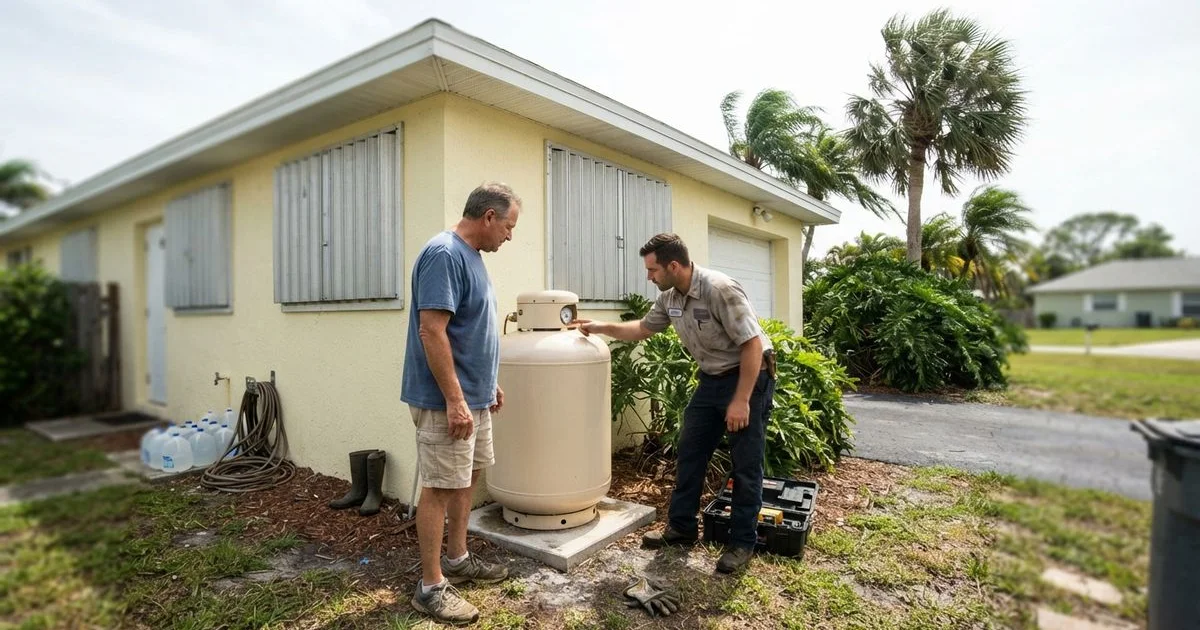
Florida’s hurricane season runs June through November, and propane is one of those things people do not think about until the power is out and the generator needs fuel. Unlike electric service, a well-stocked propane tank keeps water heaters, ranges, and generators running through an extended outage, which is exactly why planning ahead of the season matters more here than in most other states.
Before the season starts
The single best move is scheduling a fill well before storm season ramps up, ideally in late spring. Suppliers see a predictable surge in requests once a storm enters the forecast, and delivery windows shrink fast during that window. A tank that is already topped off going into peak season removes one variable from an already stressful situation.
If you rely on a whole-house or portable generator during outages, check that your tank size and typical delivery schedule actually support your generator’s fuel needs during a multi-day outage, not just a few hours. A generator that runs for days during an extended power outage uses meaningfully more propane than routine household appliances.
Securing your tank
- Check that above-ground tanks are properly anchored. Straps or ground anchors reduce the risk of a tank shifting or tipping in high winds.
- Clear loose yard debris that could become a projectile near your tank during a storm, including unsecured furniture, planters, and trellises.
- Know your tank’s flood exposure. If your property has flooded before, ask your supplier or installer whether your tank placement meets current guidance for flood-prone areas.
- Photograph your tank and connections before the storm. If anything looks different afterward, having a before-and-after comparison helps you and your supplier assess what changed.
A pre-season checklist
| Task | Why it matters |
|---|---|
| Schedule a top-off fill in late spring | Avoids scrambling once demand spikes closer to peak season |
| Confirm generator fuel needs against tank size | Prevents running out mid-outage |
| Check tank anchoring and straps | Reduces risk of tank movement in high winds |
| Clear yard debris near the tank | Limits impact damage during a storm |
| Save your supplier’s emergency contact number | Speeds up any post-storm service call |
| Know your main gas shutoff location | Lets you respond quickly if a leak is suspected after the storm |
Planning for a multi-day outage
Storm-related outages in Florida can stretch well past a day or two, especially in areas farther from major repair crews. If you plan to run a generator continuously, do the math on how many gallons per day that actually uses and compare it against your current tank level rather than assuming a full tank covers “however long it takes.” Households on automatic delivery should also confirm with their supplier how quickly a follow-up delivery can happen once roads reopen, since a monitored tank does not help much if the delivery truck cannot get through for a week.
If you use a portable generator instead of a whole-house system, keep a couple of full cylinders on hand as backup rather than relying solely on your main tank, particularly if your main tank feeds other essential appliances like a water heater or range that you will also need during the outage.
After the storm
Once it is safe to check your property, look at the tank for visible damage, shifting, or anything that smells like propane before using any gas appliances. If you notice a smell, treat it as a possible leak: leave the area and call your supplier or emergency services rather than investigating yourself. Downed lines, flooding, and debris can all affect a propane system in ways that are not always obvious from a quick glance.
If your property lost power for an extended stretch and you ran a generator, check your tank level and consider scheduling a follow-up delivery sooner than your normal schedule, since storm-related usage often runs well above a typical month.
Finding a supplier who handles storm season well
Not every propane company staffs the same level of emergency response during and after a hurricane. When comparing 24/7 emergency propane suppliers in Florida, ask specifically about their storm-season staffing, typical response time after a major event, and whether they proactively reach out to schedule pre-season top-offs for regular customers. Our directory covers suppliers across the state, and our scoring method weighs responsiveness and reliability, factors that matter most exactly when a storm is bearing down.
Questions people ask
- When should I schedule a propane top-off before hurricane season?
- Aim for a fill in late spring, before the season's typical peak months, rather than waiting until a storm is already forecast. Suppliers get busy and delivery windows shrink fast once a storm is in the forecast, so getting ahead of the rush matters more than getting the lowest price that day.
- Can my above-ground propane tank get damaged in a hurricane?
- It can, mainly from flying debris, flooding, or the tank shifting if it is not properly secured. Straps and anchoring reduce this risk. After any major storm, a visual check for damage or a shifted tank position is worth doing before using appliances again.
- How much propane do I need to run a generator during an outage?
- It depends on your generator's size and how many hours a day you run it. A whole-house generator uses considerably more propane per hour than a portable unit running a few essentials, so check your generator's rated consumption and plan your tank size or delivery schedule around realistic outage lengths, not just a single day.
- Will suppliers still deliver during an active storm?
- Most suppliers pause deliveries once conditions become unsafe for drivers, which usually starts before the storm actually makes landfall. This is exactly why topping off ahead of time matters more than counting on an emergency delivery once a storm is already approaching.