
Propane leak signs and what to do if you smell gas
By Mei Larsen · Updated 2026-07-16
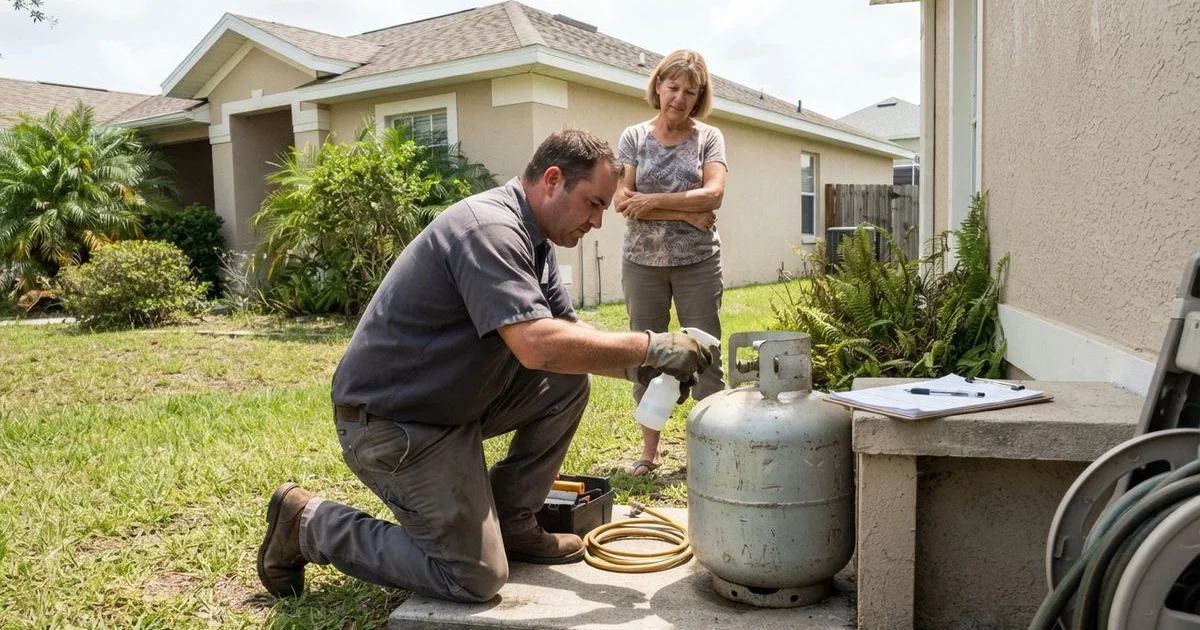
A propane leak is one of the few situations in this niche where getting it wrong has real consequences, so it is worth knowing the signs and the right response before you ever need them. This is general safety information, not a substitute for professional inspection or emergency services.
How to recognize a possible leak
Propane suppliers add an odorant, ethyl mercaptan, specifically so a leak is noticeable. Most people describe the smell as rotten eggs or sulfur. Beyond smell, a few other signs can point to a leak:
- A hissing sound near the tank, regulator, or gas line connections
- Dead or discolored vegetation in a patch of grass near an underground tank or line, even without an obvious cause
- Bubbles forming if you apply a soapy water solution to a suspected connection point (a safe way to check, since it does not involve any flame)
- A visible mist or fog-like cloud near the tank, which can happen with a larger leak
- Your propane running out much faster than your normal usage pattern would suggest
What to do immediately if you smell gas
If you smell propane inside your home or near your tank, act on it right away rather than waiting to see if it goes away on its own.
- Do not light a match, flip a light switch, or use any device that could create a spark, including phones, right at the source of the smell.
- Leave the area immediately, getting yourself, family, and pets away from the house or the tank.
- Do not attempt to find or fix the leak yourself. Once you are safely away, call your propane supplier’s emergency line or 911 if you smell gas inside your home.
- Do not turn any gas valves on or off unless you know exactly what you are doing and it is safe to do so from a distance; when in doubt, leave that to the responding technician.
- Do not re-enter your home or approach the tank until a professional confirms it is safe.
Leak signs vs. what they usually mean
| What you notice | Likely cause | What to do |
|---|---|---|
| Strong rotten-egg smell near the tank | Possible leak at the tank or regulator | Leave the area, call for emergency service |
| Hissing sound at a connection | Loose fitting or valve issue | Leave the area, do not attempt to tighten it yourself |
| Dead grass in a line near an underground tank | Possible slow leak in the buried line | Call your supplier to inspect and pressure test |
| Faint smell that comes and goes | Could be odor fade or a very minor issue | Still worth a professional check, don’t assume it’s nothing |
| No smell but unusually fast propane usage | Possible undetected leak | Ask your supplier about a pressure test at your next service |
Why leaks sometimes go unnoticed
Odor fade is a real phenomenon where the smell of propane weakens under certain conditions, including certain soil types around buried lines, new systems, or lines that have sat unused for a while. This is part of why regular professional inspections and, for larger properties, a leak detector, matter more than relying on smell alone.
Prevention matters more than reaction
Routine maintenance catches most problems before they become emergencies. Have your regulator, connections, and lines checked periodically, especially before hurricane season when a tank or line could be disturbed by wind or flooding. If you smell gas after any storm event, treat it the same as any other suspected leak: leave, then call.
It also helps to know where your main gas shutoff is located before you ever need it in a hurry. Ask your installer or supplier to point it out and explain how to use it safely, since trying to figure this out for the first time during an actual leak adds stress to an already urgent situation. Keep your supplier’s emergency contact number somewhere easy to find, not just saved in a phone that might be low on battery during a storm.
For urgent situations, browse 24/7 emergency propane suppliers who can respond quickly and safely locate the source. Our directory covers licensed suppliers across Florida, and our scoring method weighs how consistently a business responds to safety-related calls, not just routine delivery.
Questions people ask
- What does a propane leak smell like?
- Propane is odorless on its own, so suppliers add a chemical called ethyl mercaptan that produces a strong, distinctive odor, often described as rotten eggs or sulfur. If you notice that smell near your tank, appliances, or gas line, treat it as a possible leak.
- Is it safe to check for a propane leak myself?
- You can do a basic visual and smell check, but do not use a lighter, match, or any open flame to search for a leak. If you suspect a leak, the safest move is to leave the area and let a licensed technician confirm and locate it with proper equipment.
- Why can't I smell propane sometimes even when there might be a leak?
- A phenomenon called odor fade can reduce the smell in certain conditions, such as a new tank, a long unused line, or specific soil conditions around an underground tank. This is one reason leak detectors and professional line inspections matter, not just relying on your nose.
- What should I do after a suspected leak is fixed?
- Have a licensed technician pressure test the system before you use any propane appliances again. Do not assume the smell going away means the leak is resolved. A proper test confirms the line and connections are holding pressure safely.