
What to expect during propane tank installation, step by step
By Mei Larsen · Updated 2026-07-14
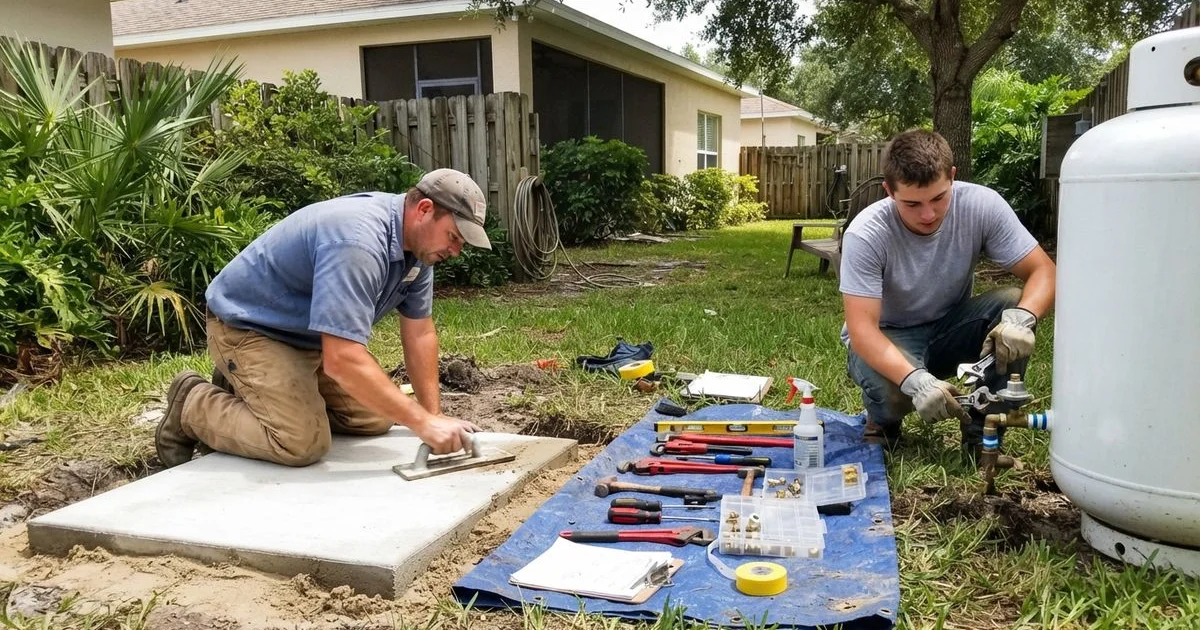
Installing a propane tank involves more steps than just dropping a tank in the yard and hooking up a line. Here is the realistic sequence, so you know what to expect and roughly how long each part takes.
The installation process, step by step
- Site visit and assessment. A technician walks your property to identify a spot that meets required setback distances from your home, property line, windows, and any other ignition sources. This is also when they confirm tank size based on your intended propane use.
- Quote and contract. You get a written quote covering the tank, installation labor, permit fees, and the gas line connection. This is the point to ask about buy-versus-lease terms if you have not already settled that question.
- Permitting. Your installer typically files for the required permit with your local building or fire department. Processing time varies by county, and this step often takes longer than the physical installation itself.
- Site prep. For an above-ground tank, this means leveling and preparing a concrete or gravel pad. For an underground tank, it means excavating to the required depth and preparing the burial site with proper corrosion protection.
- Tank placement and connection. The tank is set in place, secured, and connected to your home’s gas line. Technicians check every joint and connection before moving to the next step.
- Pressure and leak testing. Before any propane is delivered, the system is pressure tested to confirm there are no leaks in the line or connections. This step is not optional and should never be skipped.
- Inspection. A local inspector confirms the installation meets code, particularly the setback distances and the quality of the connections. Some suppliers cannot deliver a full fill until this passes.
- Initial fill. Once everything is signed off, your supplier delivers the first fill, typically to the standard 80 percent capacity limit that leaves room for the propane to expand safely.
Typical timeline
| Stage | Rough timeframe |
|---|---|
| Site visit and quote | Within a week of first contact |
| Permitting | One to three weeks, depending on the county |
| Physical installation | Usually completed in a single day |
| Inspection and first fill | A few days to a couple of weeks after installation, depending on inspector scheduling |
Underground installations generally add time at both the permitting and site prep stages compared to above-ground tanks, so if timing matters, ask your installer for a realistic estimate specific to your setup rather than a generic industry number.
Above-ground vs. underground: how the process differs
The core steps stay the same either way, but underground installations add real time and cost at two points. Excavation has to reach the required depth and the tank itself needs corrosion protection suited to being buried, which is a different product than a standard above-ground tank. Backfilling and grading the site afterward also takes longer than simply pouring or leveling a pad. If keeping the tank out of sight matters more to you than speed or cost, underground is worth it. If you are on a tighter timeline or budget, above-ground gets you to a working system faster.
What to check before signing
Before you commit to an installer, confirm who is responsible for the permit application and its cost, whether the quote includes the full gas line run to your appliances or just to the tank, and what happens if the site visit reveals your property cannot meet standard setback requirements. Some older or smaller lots need a variance or an alternative tank placement, which can change both the cost and the timeline.
It also helps to ask what happens if the pressure test finds an issue. A reputable installer treats a failed test as a normal part of the process, not a surprise, and fixes the problem before moving forward rather than pushing you toward an inspection that is likely to fail.
Finding a qualified installer
Not every propane company handles installation the same way, so it is worth comparing propane tank installation providers on licensing, how they explain the permitting process, and whether their quote is itemized or a single bundled number. A supplier who walks you through each step before work starts is usually the same one who handles the inspection and final connection without surprises.
If you are also weighing whether to buy or lease the tank itself, that is a separate cost decision worth researching before you sign a contract. Our directory lists suppliers across Florida, and our scoring method explains how we weigh installation quality and transparency when ranking them.
Questions people ask
- How long does propane tank installation take from start to finish?
- The site visit and quote can happen within a week of your first call. Once you approve the work, permitting and scheduling often take one to three weeks depending on your county, and the physical installation itself is usually completed in a single day.
- Do I need a permit to install a propane tank in Florida?
- Most residential installations require a permit from the local building or fire department, especially for larger tanks or underground installs. Your installer typically handles the permit application as part of the job, but it is worth confirming this is included before work begins.
- Will installers need to dig up my yard for an above-ground tank?
- No. Above-ground tanks sit on a concrete or gravel pad and require minimal excavation, just enough to level and stabilize the pad. Underground tanks require a full excavation to the required depth, which adds time and cost.
- What happens during the final inspection?
- An inspector checks that the tank meets required setback distances from your home, property line, and any ignition sources, that the gas line connections are sound, and that the installation matches your local fire code. Your propane supplier typically cannot deliver a full fill until this passes.
Related on this site
- Browse propane tank installation & leasing providers
- Propane tank installation and leasing costs in Florida: buy vs. lease
- Propane tank laws and permits in Florida: what homeowners need to know
- Buying or selling a Florida home with a propane tank
- What to expect when the propane truck delivers to your home
- All guides →