
How to store and handle propane cylinders safely at home
By Mei Larsen · Updated 2026-07-24
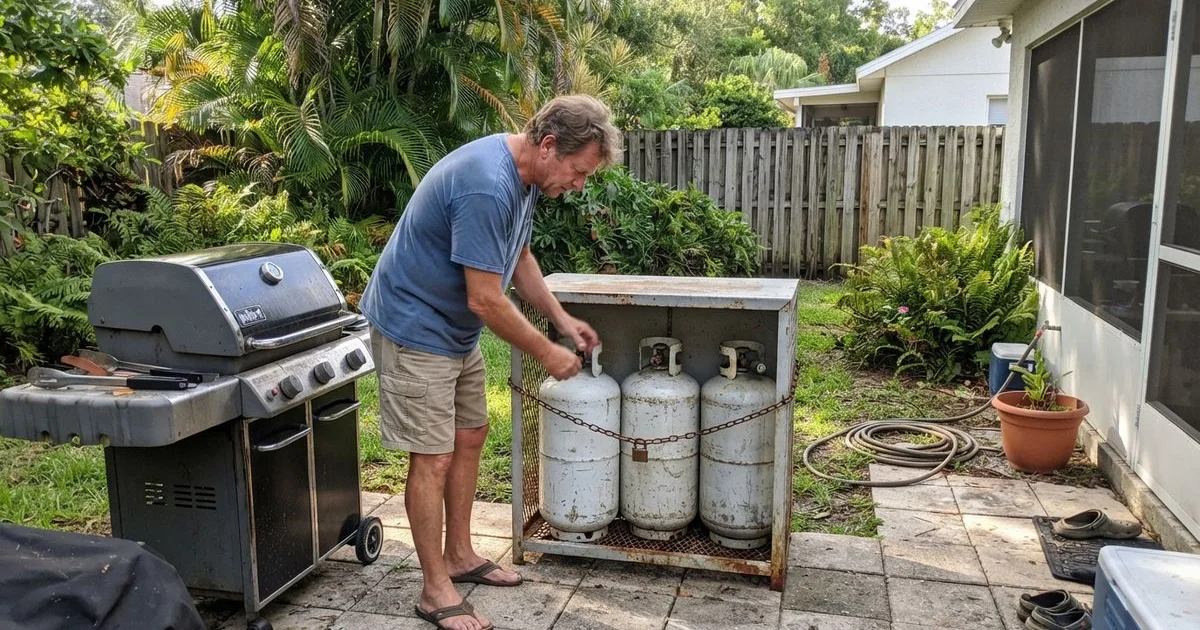
Most propane cylinder accidents trace back to a handful of avoidable habits: tanks stored on their side, left in a hot closed vehicle, or kept well past their safe service life. None of this is complicated once you know the basics. This is general safety information, not a substitute for manufacturer guidance or a professional inspection if you have concerns about a specific cylinder.
Storage basics
- Always store cylinders upright. The relief valve is designed to vent vapor, not liquid propane, so keeping the tank vertical and stable matters more than people expect.
- Choose outdoor, ventilated storage over sealed indoor spaces. Propane is heavier than air, so it settles low and can accumulate in an unventilated area if there is ever a small leak. A garage with airflow or an outdoor spot away from doors and windows works better than a closed closet.
- Keep cylinders away from ignition sources. That includes open flames, sparking equipment, and anything that generates heat, not just obvious fire hazards.
- Avoid extreme heat exposure. Never leave a cylinder in a closed car trunk on a hot day. Florida’s summer heat inside a parked vehicle climbs fast, and while cylinders are built with safety margins, avoiding the exposure altogether is the simpler habit.
- Secure tanks so they cannot tip or roll, especially if stored near a walkway, a vehicle, or anywhere a fall could damage the valve.
Handling and transport
Transporting a propane cylinder safely mostly comes down to keeping it upright, secured, and in a well-ventilated part of the vehicle, ideally the truck bed or with a window cracked if it has to ride inside. Never leave a cylinder in a vehicle longer than the trip itself, and unload it as soon as you get home rather than letting it sit in a parked car.
When handling a cylinder, check the valve and connection points for damage before connecting it to a grill or appliance. A cylinder that looks dented, heavily rusted, or has a damaged valve should not be used, refilled, or exchanged. That is exactly the kind of tank a refill station is trained to turn away, and it’s a common reason people end up paying for an exchange even when refilling is usually cheaper.
Storage do’s and don’ts
| Do | Don’t |
|---|---|
| Store upright on a stable, level surface | Store on its side or at an angle |
| Keep in a ventilated outdoor or semi-open space | Store in a sealed indoor closet or basement |
| Check the valve and collar stamp before use | Use a cylinder with visible damage or an expired certification |
| Transport in a well-ventilated part of the vehicle | Leave a cylinder in a closed, hot car trunk |
| Retire and recycle a cylinder past its service life | Try to refill a tank a station has flagged as unsafe |
When to retire a cylinder
Every DOT cylinder has a stamped manufacture or last-recertification date on the collar. Standard cylinders generally need recertification around every 12 years, and a station will refuse to fill an expired one. Beyond the date, visible rust, dents, or a damaged valve are reasons to retire a cylinder even if the date is technically still current. Most propane suppliers and exchange programs accept old cylinders for proper disposal or recycling rather than leaving you to figure out where an expired tank goes.
Storing multiple cylinders
If you keep more than one cylinder on hand, such as a spare for the grill and one for a portable heater or generator, space them out rather than stacking or clustering them tightly together. Good airflow between tanks matters just as much as airflow around a single one, and keeping them separated makes it easier to spot a problem with any individual cylinder during a quick visual check.
Label or date your spares if you tend to hold onto them for a while between uses. It is easy to lose track of which cylinder was filled most recently, and a quick glance at a written date saves you from guessing whether a tank sitting in the shed is still within a safe usage window before you connect it to anything.
Getting cylinders checked or exchanged
If you are unsure whether a cylinder in your garage is still safe to use, a cylinder refill and exchange provider can check it during a routine visit and let you know if it needs to be retired. Our directory lists Florida suppliers who handle both refills and cylinder inspections, and our scoring method weighs how consistently a business follows safety practices like checking cylinder condition before filling.
Questions people ask
- Should propane cylinders be stored upright or on their side?
- Upright, always. Storing a cylinder on its side risks liquid propane reaching the relief valve, which is designed to release vapor, not liquid. Keeping tanks upright and on a stable, level surface is one of the simplest and most important safety habits.
- Can I store a propane cylinder in my garage or shed?
- Outdoor storage in a well-ventilated area is generally safer than an enclosed indoor space, since propane is heavier than air and can pool in low, unventilated areas if a small leak occurs. A shed with airflow is more appropriate than a fully sealed closet or basement.
- How hot is too hot for propane cylinder storage in Florida?
- Keep cylinders out of direct, prolonged extreme heat where possible, and never store them in a closed vehicle trunk on a hot day. Florida summers push parked car interiors well above safe levels, and modern cylinders include a relief valve for exactly this kind of pressure buildup, but avoiding the extreme heat exposure in the first place is the better habit.
- How do I know when a propane cylinder needs to be retired instead of refilled?
- Check the stamped date on the collar against the recertification interval, generally 12 years from manufacture unless a shorter interval applies. Visible rust, dents, or damage to the valve are also reasons a station may refuse to refill or recertify a cylinder, at which point it should be retired rather than used.