
Staying safe with propane tanks and generators during a power outage
By Mei Larsen · Updated 2026-07-25
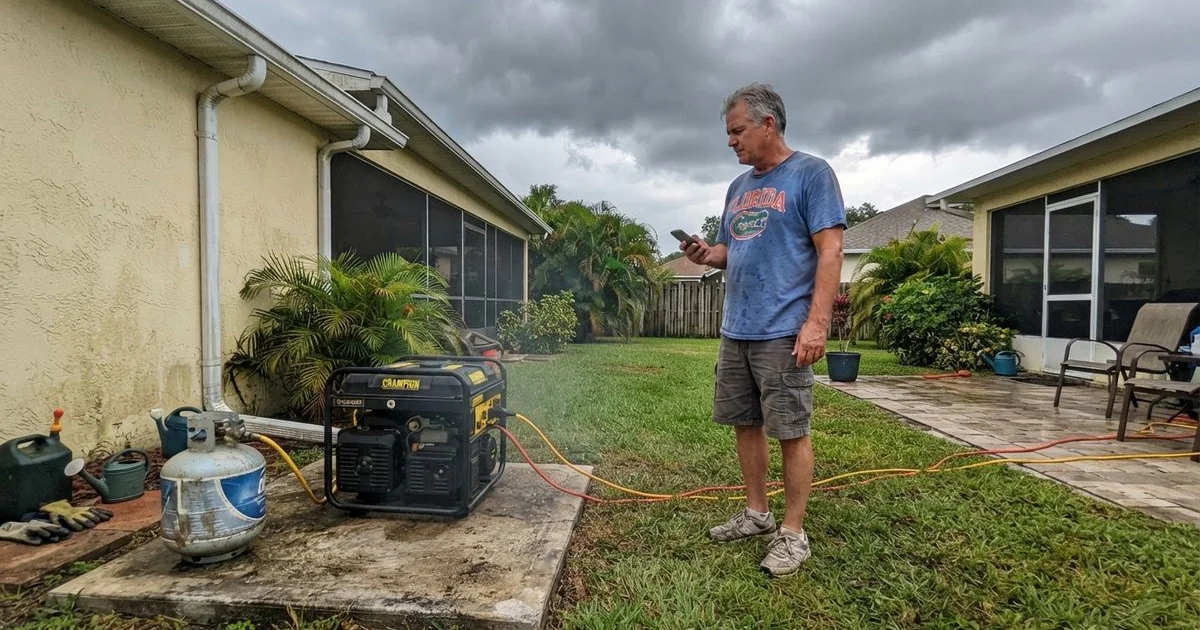
A propane generator can be the difference between a manageable outage and a genuinely difficult one, but it also introduces real risks if it is set up or run incorrectly. This is general safety information, not a substitute for your generator’s manufacturer instructions or professional guidance for a specific setup.
The biggest risk: carbon monoxide
Any generator that burns fuel, propane included, produces carbon monoxide as part of normal combustion. It is odorless and invisible, which is exactly what makes it dangerous. A generator run in a garage, a carport, a basement, or even close to an open window can push carbon monoxide into a home fast enough to be fatal, and this happens every year during storm-related outages in Florida and elsewhere.
The fix is straightforward: run the generator outdoors, away from the house, and away from windows, doors, and vents where exhaust could be drawn back inside. Follow the exact distance recommendation in your generator’s manual, since it varies by model and output size, rather than guessing at a “safe enough” distance.
Where to place a generator
- Outdoors only, never in a garage or enclosed space, even with doors or windows open for ventilation.
- Away from windows, doors, and vents so exhaust cannot drift or be drawn back into the home.
- On a dry, level, stable surface, protected from rain but never operated in wet conditions or standing water.
- Away from where people will be gathering, since exhaust and noise both matter for a generator that may run for hours or days.
- A battery-powered carbon monoxide detector inside the home adds a real layer of protection during extended generator use, catching a problem even if placement guidance was followed correctly but conditions change, like wind direction pushing exhaust back toward the house.
Fuel line and connection safety
If your generator connects to a larger propane tank rather than running on small cylinders, check the fuel line and connections before each use, particularly after a storm that could have disturbed the setup. Look for kinks, cracks, or loose fittings, and never run a generator if you smell propane near the tank or line; treat that the same as any other suspected leak and do not attempt to operate the generator until it has been checked.
Quick safety checklist
| Check | Why it matters |
|---|---|
| Generator running outdoors, away from the house | Prevents carbon monoxide from entering the home |
| Distance from windows and doors matches manufacturer guidance | Reduces risk of exhaust drifting inside |
| Carbon monoxide detector installed and working | Catches a problem even if placement was correct |
| Fuel line and connections inspected before use | Reduces leak risk, especially after storm conditions |
| Generator on a dry, stable surface | Reduces electrical and fire risk |
Noise, neighbors, and running for extended periods
Beyond the immediate safety questions, running a generator for several days brings practical considerations that are easy to overlook in the moment. Check your generator’s oil level and general condition on a schedule if it is running continuously, since most portable units are not designed to run nonstop for a week without a maintenance break. If you are in a neighborhood with attached or closely spaced homes, be mindful of exhaust direction relative to neighboring windows too, not just your own.
Keep a simple log of run time and refueling if you are relying on the generator for several days, so you have a clear sense of remaining propane and are not caught off guard by a tank running low overnight.
Whole-house generators and permanent installation
A permanently installed whole-house generator connected to a propane tank is typically set up by a licensed technician who accounts for placement, ventilation, and code requirements as part of the installation. If you are considering one, the setup itself handles most of the placement concerns that apply to portable units, but the same rule holds after any storm: check the connections and surrounding area before assuming everything is fine.
Where to learn more
For homeowners setting up propane service for the first time, browsing propane suppliers across Florida is a good starting point for both fuel delivery and generator-related tank questions. Our scoring method explains how we evaluate suppliers on service reliability and safety practices, which matters most during exactly the kind of extended outage a generator is meant to get you through.
Questions people ask
- Can a propane generator produce carbon monoxide?
- Yes. Any fuel-burning engine, including propane, produces carbon monoxide as a byproduct of combustion. A generator run in an enclosed or poorly ventilated space can raise indoor carbon monoxide levels to dangerous or fatal levels within minutes, which is why placement and ventilation matter as much as fuel supply.
- How far from my house should a propane generator run?
- Manufacturer guidance typically calls for a generator to run well away from windows, doors, and vents, often a distance of at least 20 feet, though you should follow the specific distance in your generator's manual since it varies by model and output. The goal is keeping exhaust from being drawn back into the home.
- Is it safe to run a portable propane generator in a garage with the door open?
- No. An open garage door does not provide adequate ventilation, and carbon monoxide can still build up and drift into the attached home. Generators should run outdoors, in the open, away from the structure entirely.
- What should I do if I suspect carbon monoxide exposure during an outage?
- Get everyone into fresh air immediately and call 911 or emergency services. Symptoms like headache, dizziness, nausea, or confusion can indicate exposure. Do not go back inside to investigate the generator or check on anything until it is confirmed safe to do so.